
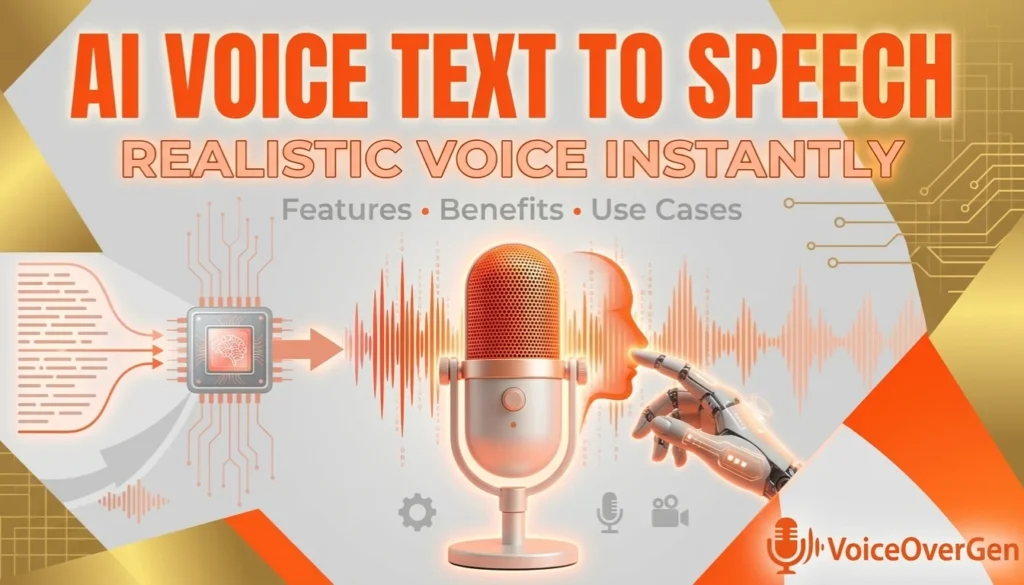
Artificial intelligence has dramatically changed how digital content is created and consumed. One of the most powerful developments in recent years is AI Voice Text to Speech, a technology that can convert written scripts into natural sounding voice narration within seconds. Instead of hiring voice actors, recording audio, and editing files manually, creators can now generate professional voiceovers instantly using AI powered tools.
Modern AI Voice Text to Speech technology uses deep learning models trained on thousands of hours of human speech. These systems understand pronunciation, tone, and context, allowing them to generate voices that sound natural rather than robotic. As a result, businesses, creators, educators, and marketers are rapidly adopting AI voice generation tools.
Whether you are producing YouTube videos, building eLearning courses, creating podcasts, or improving accessibility, AI voice text to speech generators allow you to transform written content into realistic audio quickly and efficiently.
What Is AI Voice Text to Speech
AI Voice Text to Speech is a technology that converts written text into spoken audio using artificial intelligence models trained on large speech datasets. Unlike traditional text to speech systems that sounded mechanical, modern neural speech models generate natural sounding voices with realistic pacing and tone.
Many modern AI voice platforms allow users to paste a script and instantly generate voice narration in multiple languages and accents. For example, tools like Free AI Voice Generator allow users to convert scripts into audio within seconds.
These systems are powered by neural networks that understand language patterns and generate speech dynamically instead of stitching together pre recorded sounds.
As a result, AI voice text to speech tools are now widely used for video narration, marketing content, training materials, and automated voice assistants.
How AI Voice Text to Speech Works
Modern AI voice generation systems rely on several advanced machine learning processes.
Text Processing
First, the AI analyzes the input text and identifies punctuation, sentence structure, and grammar. This helps the system determine pauses, emphasis, and pronunciation.
Linguistic Modeling
The text is converted into phonemes, which represent the smallest units of sound in speech. This step ensures correct pronunciation of words.
Neural Speech Synthesis
Deep learning models such as Tacotron, WaveNet, and transformer based speech models generate the actual voice waveform.
Audio Rendering
The generated waveform is converted into downloadable audio files such as MP3 or WAV that can be used in videos, podcasts, apps, and presentations.
If you want a deeper technical explanation, the guide AI Text to Speech Guide explains the full pipeline behind neural voice generation.
Key Features of Modern AI Voice Text to Speech Platforms
Modern AI voice tools include powerful features that make them useful for both creators and businesses.
| Feature | Description | Benefit |
|---|---|---|
| Natural AI Voices | Neural voices trained on real human speech | Produces realistic narration |
| Multi Language Support | Supports dozens of languages and accents | Enables global content creation |
| Voice Customization | Adjust pitch, speed, tone, and pauses | Creates expressive audio |
| Voice Cloning | Replicate a specific voice using training data | Useful for brand voice |
| Instant Script Conversion | Convert long scripts into speech quickly | Saves hours of production time |
| API Integration | Integrate TTS into apps and platforms | Enables scalable automation |
Many platforms such as VoiceOverGen provide simple interfaces where users can paste text, select a voice, and generate audio instantly.
Benefits of AI Voice Text to Speech
AI voice generation provides several advantages over traditional audio recording methods.
Faster Content Production
Creators no longer need recording sessions or editing workflows. With AI voice text to speech generators, a complete narration can be produced within seconds.
Lower Production Costs
Professional voice recording can be expensive. AI voice text to speech tools eliminate studio costs while still delivering high quality results.
Scalable Content Creation
Businesses can generate hundreds or thousands of voice recordings quickly for training programs, product tutorials, or global marketing campaigns.
Improved Accessibility
Text to speech technology helps people with visual impairments access written content through audio narration.
Real World Use Cases
AI voice technology is used across many industries.
| Industry | Example Use Case | Impact |
|---|---|---|
| YouTube Content | Video narration | Faster video production |
| Marketing | Audio ads and promotional content | Scalable campaigns |
| Education | Narrated online courses | Improves accessibility |
| Podcasts | AI generated podcast narration | Rapid production |
| Customer Support | Automated voice responses | Reduces support workload |
| Accessibility | Audio versions of articles | Helps visually impaired users |
Creators looking to understand how these tools work can explore the detailed AI Voice Generator Guide to see how AI voice platforms are used in real projects.
Popular AI Voice Text to Speech Platforms
Several AI voice platforms are available today, each designed for different use cases.
| Platform | Strength | Typical Users |
|---|---|---|
| Amazon Polly | Reliable cloud based TTS API | Developers |
| ElevenLabs | Highly realistic voices | Media creators |
| Google Cloud TTS | Powerful developer API | Enterprise systems |
| PlayHT | Podcast and narration voices | Content creators |
| VoiceOverGen | Script to voice generation for creators | Video creators, educators |
For those who want to explore AI voice text to speech tools in more detail, the article Text to Speech AI explains how these tools work and how creators can use them effectively.
Example Workflow: Converting Text to Speech
Here is a simple workflow that many creators follow when producing AI voice narration.
| Step | Action |
|---|---|
| Step 1 | Write your script |
| Step 2 | Paste the script into an AI voice generator |
| Step 3 | Select language, voice style, and tone |
| Step 4 | Generate the voiceover |
| Step 5 | Download the audio and add it to your project |
With modern tools like VoiceOverGen, this entire process can take less than a minute.
Challenges and Limitations
Although AI voice technology has improved dramatically, some limitations still exist.
Emotional Expression
While AI Voice Text to Speech systems sound realistic, replicating complex emotions or acting styles can still be challenging.
Ethical Concerns
Voice cloning technology raises concerns about misuse and impersonation if not regulated responsibly.
Context Awareness
AI sometimes struggles with uncommon names, technical terms, or specialized vocabulary.
However, ongoing advancements in neural speech models are steadily addressing these issues.
Future of AI Voice Text to Speech
AI voice technology continues to evolve rapidly. Several innovations are shaping the next generation of AI voice text to speech systems.
Future developments include:
- Ultra realistic human level AI voices
- Real time voice generation for live applications
- Emotionally expressive AI narration
- Personalized voice models for brands
- Integration with AI avatars and video generation
As these technologies mature, AI voice text to speech platforms will become essential tools for digital content creation.
Conclusion
AI Voice Text to Speech has transformed the way audio content is produced. By converting written scripts into realistic voice narration instantly, it allows creators, businesses, and educators to produce professional audio without traditional recording setups.
With the help of modern AI voice platforms such as VoiceOverGen and other neural speech tools, anyone can generate studio quality narration within minutes. As AI speech synthesis continues to improve, AI voice text to speech technology will play a central role in the future of digital media, accessibility, and automated communication.