
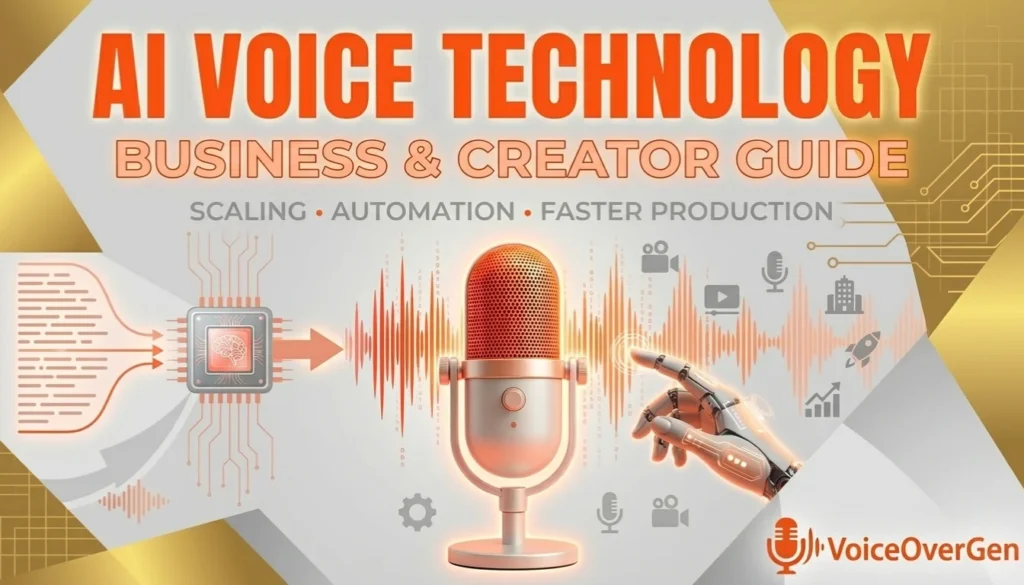
Artificial intelligence is transforming how digital content is created, distributed, and consumed. One of the fastest growing innovations in this space is Text to Voice AI, a technology that converts written text into natural sounding speech using advanced neural networks. What once required professional voice actors and expensive recording studios can now be done instantly using AI powered voice generators.
Modern text to voice AI tools are capable of producing realistic speech with natural tone, pacing, and pronunciation. These systems analyze written content, interpret linguistic patterns, and generate audio that sounds remarkably human. As a result, businesses, educators, marketers, and creators are increasingly adopting AI voice technology to scale their content production.
From YouTube narration and podcasts to eLearning and marketing campaigns, text to voice AI technology allows organizations to transform written scripts into professional voiceovers within seconds. In this guide, we explore how text to voice AI works, the features that make it powerful, and how businesses and creators are using it to produce audio content more efficiently.
What Is Text to Voice AI
Text to Voice AI refers to artificial intelligence systems that convert written text into spoken audio using machine learning models trained on human speech. These systems rely on neural speech synthesis techniques that generate natural sounding voices rather than the robotic audio associated with older text to speech engines.
Unlike traditional methods that relied on pre recorded sound fragments, modern text to voice AI tools generate speech dynamically using deep learning. This allows them to produce smoother and more expressive voices that closely mimic human narration.
Many platforms now allow users to paste a script and instantly create voice narration. For example, the Free AI Voice Generator enables users to convert text into realistic voiceovers quickly without recording equipment.
Because of its efficiency and scalability, text to voice AI technology is becoming an essential tool for digital media production and automated communication.
How Text to Voice AI Works
AI voice generation involves several sophisticated processes powered by machine learning.
Text Analysis
The system first processes the written text and analyzes punctuation, sentence structure, and context. This step helps determine pauses, emphasis, and pronunciation.
Phoneme Conversion
The text is broken into phonemes, which represent the individual sound units of speech. This ensures accurate pronunciation for words and phrases.
Neural Speech Synthesis
Deep learning models such as Tacotron, WaveNet, and transformer based architectures generate realistic speech waveforms.
Audio Generation
The generated waveform is converted into audio files such as MP3 or WAV that can be used in videos, podcasts, presentations, or applications.
For readers interested in understanding the full pipeline behind AI voice synthesis, the AI Text to Speech Guide explains the technical foundations of neural speech generation.
Core Features of Text to Voice AI Platforms
Modern text to voice AI tools include a wide range of features designed to support creators, developers, and businesses.
| Feature | Description | Benefit |
|---|---|---|
| Natural AI Voices | Neural voices trained on human speech data | Creates realistic narration |
| Multi Language Support | Dozens of languages and accents | Enables global content creation |
| Voice Customization | Adjust tone, speed, and pitch | Improves storytelling |
| Voice Cloning | Replicate specific voices with AI | Supports brand identity |
| Script to Audio Conversion | Convert long scripts into voice instantly | Saves production time |
| API Integration | Developers can integrate voice generation | Enables scalable automation |
Platforms like VoiceOverGen simplify this process by allowing users to generate high quality voiceovers directly from text scripts in just a few clicks.
How Businesses Use Text to Voice AI
Businesses are increasingly adopting text to voice AI technology to streamline communication and content production.
Marketing and Advertising
Brands use AI generated voiceovers for video ads, product demos, and promotional campaigns. AI voice generation makes it easier to localize content for different languages and markets.
Customer Support Automation
Companies integrate AI voice technology into call systems and voice assistants to handle customer inquiries automatically.
Training and eLearning
Corporate training programs and educational platforms use AI voice narration to create scalable learning materials.
Product Demonstrations
AI voice tools allow companies to produce tutorial videos and product walkthroughs without recording voiceovers manually.
How Creators Use Text to Voice AI
Content creators are among the fastest adopters of text to voice AI tools because they dramatically reduce production time.
| Creator Type | Use Case | Benefit |
|---|---|---|
| YouTubers | Video narration | Faster content creation |
| Podcasters | AI narration for scripted episodes | Reduces recording time |
| Course Creators | Voiceovers for eLearning modules | Scalable course production |
| Bloggers | Audio versions of articles | Improves accessibility |
| Social Media Creators | Short video narration | Consistent voice branding |
Creators who want to explore AI voice production in more depth can read the AI Voice Generator Guide which explains how different AI voice tools are used in real world workflows.
Popular Text to Voice AI Platforms
Several platforms provide advanced AI voice generation capabilities. Each platform is designed for slightly different audiences.
| Platform | Key Strength | Typical Users |
|---|---|---|
| Amazon Polly | Cloud based TTS API | Developers |
| ElevenLabs | Highly realistic AI voices | Media creators |
| Google Cloud Text to Speech | Scalable developer tools | Enterprise systems |
| PlayHT | Podcast and narration focused voices | Content creators |
| VoiceOverGen | Script to voice conversion for creators | Marketers and educators |
For a deeper look at how text to voice AI platforms work, the article Text to Speech AI explains their capabilities and common use cases.
Workflow Example: Creating AI Voice from Text
Below is a typical workflow for converting text into AI generated voice narration.
| Step | Process |
|---|---|
| Step 1 | Write the script or content |
| Step 2 | Paste the script into a text to voice AI tool |
| Step 3 | Choose a voice style and language |
| Step 4 | Generate the voiceover |
| Step 5 | Download and use the audio file |
Using modern AI platforms, this process usually takes less than a minute.
Challenges of Text to Voice AI
Although text to voice AI technology has advanced rapidly, some limitations still exist.
Emotional Expression
AI voices sound natural but may struggle with complex emotional acting compared to professional voice actors.
Ethical Considerations
Voice cloning can raise concerns about misuse or impersonation if safeguards are not implemented.
Pronunciation Accuracy
AI may occasionally mispronounce uncommon words or specialized terminology.
Developers continue to improve models to address these challenges.
The Future of Text to Voice AI
The next generation of text to voice AI systems will focus on greater realism, personalization, and real time performance.
Emerging trends include:
- Ultra realistic human level AI voices
- Real time speech generation for live applications
- Emotionally expressive AI narration
- Personalized brand voices
- Integration with AI avatars and video generation
As these technologies evolve, text to voice AI tools will become a central part of digital media production and automated communication.
Conclusion
Text to Voice AI is revolutionizing how businesses and creators produce audio content. By converting written text into natural sounding speech instantly, AI voice technology eliminates traditional recording barriers and allows organizations to scale their content production.
Platforms such as VoiceOverGen and other modern AI voice generators make it possible to generate professional narration quickly, helping creators focus on storytelling and businesses streamline communication. As neural speech models continue to improve, text to voice AI technology will play an even bigger role in the future of content creation and digital experiences.