
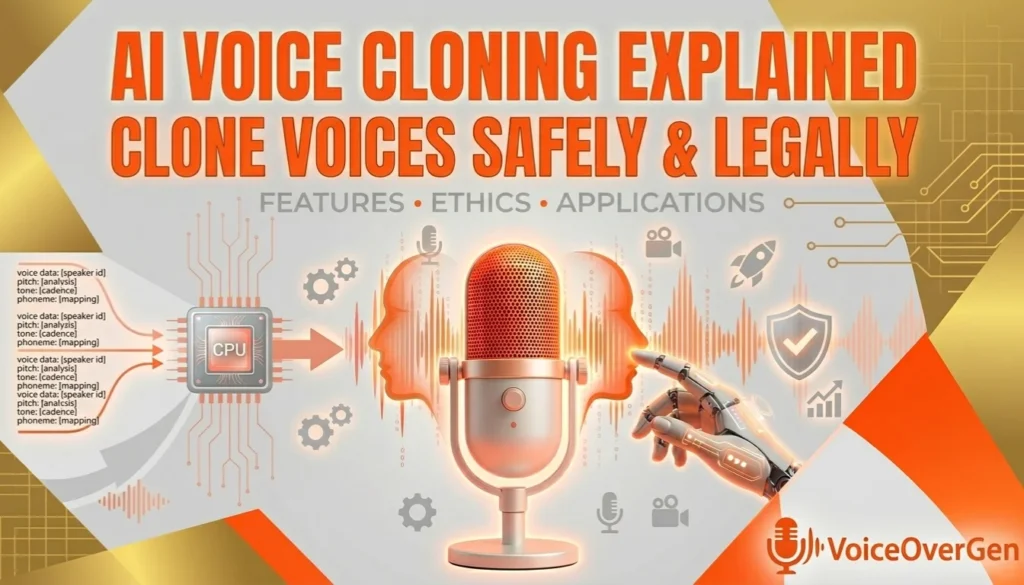
Artificial intelligence has transformed the way voices are created, edited, and distributed in digital media. One of the most fascinating developments in this space is AI voice cloning, a technology that allows software to replicate a human voice using machine learning. With only a short voice sample, modern AI systems can generate speech that closely resembles the original speaker’s tone, pronunciation, and speaking style.
This technology is already being used across industries including content creation, audiobooks, video production, gaming, and accessibility tools. Creators can generate voiceovers quickly, businesses can scale audio production, and individuals can preserve unique voice identities for digital communication.
Modern voice cloning systems are built on the same technologies used in AI voice generators and advanced speech synthesis models that convert text into realistic audio.
However, voice cloning also raises important questions about ethics, consent, and legal use. Because AI can recreate a person’s voice so accurately, responsible usage becomes critical.
In this guide, we will explore how AI voice cloning works, how creators and businesses use it, and the best practices for cloning voices safely and legally.
What Is AI Voice Cloning?
AI voice cloning is a speech synthesis technology that replicates a specific person’s voice using artificial intelligence. Instead of generating a generic voice, the system learns the characteristics of a particular speaker and recreates their vocal identity.
Modern voice cloning systems analyze elements such as pitch, tone, cadence, accent, and speech rhythm. Once trained, the AI can generate new speech in the same voice even if the original speaker never recorded those specific words.
Voice cloning technology is part of the broader AI voice text-to-speech ecosystem where neural speech models generate human-like audio from written text.
Many creators use voice cloning together with modern AI speech generators to produce narration, podcasts, and video voiceovers more efficiently.
How AI Voice Cloning Technology Works
AI voice cloning relies on several machine learning techniques that analyze and reproduce speech patterns.
Voice Data Collection
The process begins with collecting voice recordings from the speaker whose voice will be cloned. These recordings provide the training data that the AI uses to learn vocal characteristics.
The more diverse and high-quality the voice samples are, the better the AI can reproduce the voice.
Voice Model Training
Once recordings are collected, the system analyzes them to identify acoustic features such as pitch, speech timing, pronunciation patterns, and vocal texture.
Neural networks then build a digital voice model capable of replicating these characteristics. The same neural models power modern AI text-to-speech technology used in many voice generation platforms.
Speech Generation
After training, the cloned voice can generate speech from any text input. The system converts written text into spoken audio using the trained voice model.
Modern voice cloning platforms combine this process with advanced text-to-speech AI systems that produce realistic speech with natural pacing and emotional tone.
Common Use Cases for AI Voice Cloning
AI voice cloning is rapidly expanding across many industries and creative workflows.
Content Creation and Video Production
YouTubers and digital creators use voice cloning to generate narration for videos without repeatedly recording their own voice. Once a voice model is trained, creators can quickly produce voiceovers for scripts.
Many creators rely on modern text-to-voice AI tools to convert written scripts into audio narration for videos.
Audiobooks and Storytelling
Voice cloning helps audiobook publishers maintain consistent narration across long-form content. AI can generate hours of speech while maintaining a consistent voice style.
Gaming and Animation
Game developers and animation studios use cloned voices to produce character dialogue efficiently while maintaining a specific vocal identity.
Accessibility and Assistive Technology
Voice cloning technology is also used to help individuals who lose their ability to speak due to medical conditions. AI can recreate a person’s voice so they can continue communicating using speech synthesis.
Marketing and Business Communication
Businesses use AI voices for product demos, advertisements, explainer videos, and digital assistants.
Many organizations start experimenting with free AI voice generator tools to test AI voice technology before implementing advanced voice cloning workflows.
AI Voice Cloning Tools
Several platforms provide voice cloning capabilities with varying levels of realism and customization.
ElevenLabs
ElevenLabs is widely known for its realistic voice cloning and high-quality speech synthesis. It allows creators to produce narration, audiobooks, and character voices.
PlayHT
PlayHT offers AI voice cloning along with multilingual voice generation and developer APIs.
Resemble AI
Resemble AI focuses on enterprise-level voice cloning solutions used in gaming, marketing, and digital assistants.
VoiceOverGen
VoiceOverGen provides tools that allow creators to generate AI voiceovers for videos, podcasts, and digital content. The platform is part of a growing ecosystem of AI voice generators that help creators convert scripts into natural audio narration.
Many creators exploring voice technology begin with free AI voice generators before experimenting with advanced cloning features.
Legal and Ethical Considerations of Voice Cloning
Because voice cloning can replicate a person’s identity, ethical and legal considerations are extremely important.
Obtain Consent
The most important rule is obtaining permission before cloning someone’s voice. Using a person’s voice without consent may violate privacy or intellectual property laws.
Avoid Impersonation
AI voice cloning should never be used to impersonate individuals in a misleading or deceptive way.
Follow Platform Policies
Most AI voice platforms require users to confirm they have permission before cloning a voice.
Protect Personal Identity
Voice cloning systems should include safeguards that prevent misuse, identity fraud, or unauthorized voice replication.
Responsible usage ensures that AI voice technology remains beneficial rather than harmful.
Limitations of AI Voice Cloning
Although voice cloning technology has advanced rapidly, it still has some limitations.
Voice quality often depends heavily on training data. Poor audio samples can result in unnatural speech generation.
Free tools may also limit voice quality, character usage, or customization options. Many beginners experiment with best free AI text-to-speech tools before moving to more advanced voice cloning platforms.
Additionally, replicating complex emotions or dramatic performance can still be challenging for AI.
Despite these challenges, speech synthesis technology continues to improve rapidly.
The Future of AI Voice Cloning
AI voice cloning is expected to become more accurate, accessible, and customizable in the coming years.
Future systems will likely support real-time voice cloning where speech can be generated instantly during conversations or live broadcasts.
Another major development is multilingual voice cloning, where the same digital voice can speak multiple languages while preserving the speaker’s identity.
As speech synthesis technology evolves, modern AI voice generators and text-to-speech platforms will continue expanding the capabilities of digital voice creation.
Conclusion
AI voice cloning is one of the most exciting innovations in modern speech technology. By analyzing voice recordings and learning vocal patterns, AI systems can recreate voices with remarkable accuracy.
For creators, this technology opens new possibilities for video production, storytelling, and digital media. For accessibility applications, it offers powerful ways to preserve personal voice identity.
At the same time, ethical use remains essential. Consent, transparency, and responsible implementation ensure that voice cloning technology benefits society while minimizing potential misuse.
As AI speech technology continues to evolve, voice cloning will play an increasingly important role in digital communication, media production, and personalized voice experiences.